

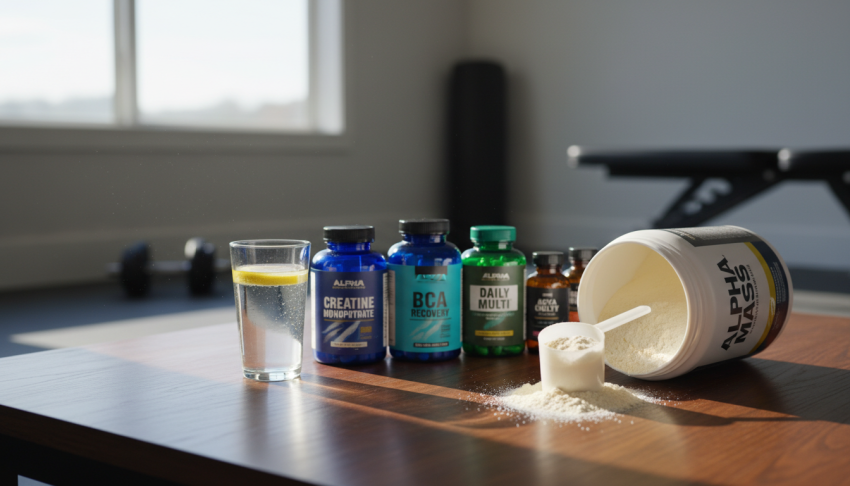
This quick guide explains which products reliably help add size when you pair them with steady resistance training and enough calories.
Creatine and whey protein top the list in the research. Creatine can raise muscle creatine stores by roughly 40% and often improves strength and mass. Whey at about 20–40 g per serving supports lean mass gains in 8–12 week trials.
Supplements can speed progress, but the main drivers remain consistent workouts, solid nutrition, and smart recovery. This roundup shows who each product fits, what it does, and how to choose one that matches goals like a lean bulk or increased strength.
You’ll get evidence-first advice on dosing, timing, and stacking. I’ll call out options with mixed support so you don’t waste money on hype.
Key Takeaways
- Creatine and whey have the strongest research backing for added mass and strength.
- Training and calorie surplus drive results; products make gains easier.
- Focus on dose and consistency over trendy blends.
- Choose items based on goals: lean bulk, hard gainer, or strength focus.
- Expect clear guidance on grams per day, timing, and how to stack later in the article.
What it really takes to build muscle mass
Real gains come from a simple, repeatable plan: push your training, eat a modest surplus, and meet daily protein targets. These three steps are the backbone of any effective program.
Progressive resistance training
Progressive overload means giving muscles a reason to adapt—use more reps, add weight, improve technique, or raise weekly volume. Do one small variable at a time so your body can recover and get stronger.
Getting stronger directly boosts building outcomes. As strength rises, you can handle heavier loads and more quality work. Over months, that extra work translates into clear improvements in size and strength.
Calories and practical surplus tips
A calorie surplus fuels new tissue. If you under-eat, gains stall even with great training.
- Add calories slowly—start +200–300 kcal per day.
- Track weight weekly and tweak intake based on progress.
- Watch training performance and recovery as your guide.
Protein targets and timing
Aim for roughly 0.6–0.9 g per pound of body weight per day (about 1.4–2.0 g/kg). This range supports muscle protein synthesis and recovery during regular exercise.
Spread protein across the day in multiple feedings to ease hitting totals and to support recovery between sessions. Supplements can help with convenience, but they don’t replace a solid diet and training plan.
“Eat enough, train smart, and give your body time to adapt.”
How we chose the best supplements for muscle growth
Choices were guided by consistent human evidence, realistic doses, and benefits you can measure in the gym.
Selection criteria focused on ingredients with repeated clinical research, sensible serving sizes, and outcomes that matter: strength, lean mass, training output, recovery, and energy.
Real-world results mean more than a p-value. We looked for products that fit daily routines and budgets, and that athletes can use without complex timing or special equipment.
Use cases that match training stage
Beginners get the most return by nailing training and diet, then adding a small stack like creatine and a protein powder to close intake gaps.
Experienced lifters may add targeted items during high-volume blocks to boost performance and recovery.
Hard gainers often need calories first—weight gainers or carb powders can make a larger daily intake easier to hit.
Quality checks and realistic timelines
- Label transparency: clear ingredient amounts, not proprietary blends.
- Third-party testing and dosing accuracy for protein and creatine monohydrate.
- Expect some performance gains within days to weeks; visible changes in mass take consistent weeks to months.
Best supplements for muscle growth: top picks worth buying
Smart, evidence-backed additions can lift training quality and make gains easier when your workouts and calories are on track.
Shortlist at a glance:
- Creatine monohydrate — the foundational pick to boost strength, training output, and stored creatine (can rise ~40%).
- Whey protein powder — a quick way to hit daily protein targets when cooking or appetite get in the way.
- Weight gainer shakes — a calorie-surplus shortcut; many servings contain 75–300 g carbs and 20–60 g protein.
- Essential amino acids (EAAs) — useful at ~5–9 g around fasted workouts or tight diets.
- HMB — may aid recovery and lean mass in newer lifters at ~1.5–3 g/day for several weeks.
- Carbohydrate powders — pair quick carbs with protein post-session to boost muscle protein synthesis.
- Beta-alanine — helps reduce fatigue and let you push volume in intense training blocks.
Later sections dig into dosing, timing, and how to stack these options based on your goals. Use creatine monohydrate as a base, add whey protein to meet totals, and choose situational items like EAAs, HMB, carbs, or beta-alanine when your phase calls for them.
Creatine for muscle growth and strength
A small daily dose of creatine helps fuel short, intense efforts and makes heavy sets more productive. In plain terms, creatine is a compound stored in the muscle that helps regenerate quick energy during hard sets. That extra capacity often translates to better training and, over time, more size and strength.
How it supports cells and performance
Creatine raises water inside muscle cells and may support signaling tied to IGF-1 and growth. Increased hydration is normal and not the same as fat gain. When you keep output higher across sessions, your body gets a stronger signal to adapt.
Loading versus daily dosing
Two common options work: load or go straight to maintenance.
- Loading: about 5 g four times a day for 5–7 days (~0.3 g/kg), then ~5 g per day maintenance.
- No-load: take ~5 g per day and stores saturate in a few weeks. Larger individuals may use up to ~10 g per day temporarily.
Timing and recovery
Consistency matters most, but taking creatine after exercise is an easy habit and can help recovery by pulling water and carbs back into the muscle. That can speed repletion between sessions.
Notes for women and safety
Research suggests women may start with lower stores and see drops across menstruation, pregnancy, and menopause, so creatine can be especially useful. Stick with creatine monohydrate, hydrate normally, and choose brands with clear labels to protect your health.
Protein powders for building muscle and protein synthesis
Protein powder is a practical tool to help you hit consistent daily protein totals without overcomplicating meals. A quality whey shake gives a complete amino acid profile to support protein synthesis and recovery after resistance work.
Whey isolate vs concentrate: digestion speed and macros
Whey concentrate usually contains slightly more carbs and fat and a bit less protein per scoop. It often costs less and suits people who tolerate lactose.
Whey isolate is more processed, yields higher protein per serving, and digests faster—useful if you want leaner macros or have mild lactose sensitivity.
How much protein to aim for per pound of body weight
Aim for roughly 0.6–0.9 g per pound of body weight per day. For most people, that translates to multiple meals plus one 20–40 g whey shake to close the gap.
Best times to take protein: post-workout and between meals
Post-workout shakes are convenient and effective; studies commonly use 20–40 g doses and show gains in lean body mass over 8–12 weeks.
Between-meal shakes help people who struggle to hit totals. Remember: total protein per day matters most; timing is secondary but practical timing improves adherence.
Shopping cues: look for clear protein-per-scoop numbers, minimal fillers, and third-party testing. The most useful powder is the one you’ll use consistently because it tastes good and fits your routine.
Amino acids for muscle protein synthesis support
A focused dose of essential amino acids can be a simple, targeted way to support recovery around hard training sessions.
Essential amino acids dosing around resistance exercise
Essential amino acids are the nine dietary nutrients the body cannot make. They are directly used in muscle protein synthesis and are key when whole-food protein is missing.
Practical dosing is about 5–9 g taken before and/or after resistance work. That range is most useful during fasted exercise, low appetite, or calorie-restricted phases.
BCAAs vs complete protein: when supplements help and when they don’t
Branch-chained amino acids can stimulate pathways, but complete protein provides all needed building blocks. If you already meet daily protein targets with whey or food, extra amino products add little to results.
- When they help: early-morning training, travel, or light stomach options on workout days.
- When they don’t: you consistently hit daily protein and train hard—whole protein wins.
Buying tip: choose transparent labels with grams per serving and clear amino profiles, not vague blends. Amino supplements can support the process, but training progression and total protein still do most of the work.
Carbs and mass gainers for hard gainers
Hard gainers often stall because they can’t keep daily calories high enough to drive real mass. Concentrated carbs and calorie-dense shakes are tools to fix that gap without forcing extra meals.
Carb powders after workouts: pairing carbs + protein
Fast-digesting carbs like Vitargo or Karbolyn deliver quick sugar to muscle. When mixed with protein after training, they raise insulin and speed glycogen repletion.
This combo can boost recovery and create a larger stimulus to build muscle mass than protein alone.
Weight gainer basics and when they help
- Typical serving: ~75–300 g carbs, ~20–60 g protein, ~0–15 g fat; some exceed 1,000 calories.
- Use cases: busy schedules, high daily energy needs, physically demanding jobs, or anyone who can’t eat enough solid food.
When to skip gainers and a practical tip
If you can add calories with rice, oats, potatoes, dairy, or oils, whole foods are cheaper and more filling. If you try a gainer, start with half a serving and track weekly weight to limit unwanted fat.
HMB for recovery and muscle retention
Think of HMB as a recovery aid that may blunt the damage from sudden spikes in volume or intensity. It’s a metabolite of the amino acid leucine and is marketed because it can reduce muscle protein breakdown in certain situations.

Who benefits most
Beginners, people returning after a layoff, and anyone who jumps training intensity quickly see the clearest gains. These groups often face excess soreness and missed sessions, so better recovery helps keep training consistent.
Practical dosing and timing
Common guidance is ~1.5–3 g/day taken consistently for at least 3–12 weeks to evaluate effects on muscle mass and mass retention. Some protocols suggest 1–2 g about 30–60 minutes before a workout to support acute recovery and performance.
What to expect and buyer tips
HMB is not a universal mass builder. Expect modest gains in early training phases or during rapid workload increases, not dramatic changes overnight. Evaluate results after several weeks, not two workouts.
- Pick products that list HMB form and mg per serving to avoid underdosing.
- Use HMB to protect progress when soreness or recovery limits consistent training.
- Remember: improved recovery supports better training consistency, which drives long-term muscle mass and strength gains.
Beta-alanine for training volume and performance
Beta-alanine helps you push more volume in tough sessions by delaying fatigue. Think of it as a tool that raises work capacity so each session becomes more productive.
What the research suggests about lean mass outcomes
Research shows clear benefits to exercise performance and fatigue resistance. Some studies report modest increases in lean body mass with ~4 g/day over about eight weeks.
Broader reviews are mixed on body composition, so buy this as a performance product first and a mass aid second.
Practical dosing and what the “tingles” mean
A common dose is ~3–4 grams per day. Splitting into 2–4 smaller servings reduces paresthesia, the harmless “tingles” people feel.
The sensation is a mild, pins-and-needles feeling caused by nerve receptors and is not dangerous. If it bothers you, use 0.8–1 g servings several times daily.
- Best use: high-volume blocks, HIIT, or sessions where fatigue limits progress.
- Stacking: pairs well with creatine and protein staples; it does not replace basics like calories and progressive training.
- Decision rule: if you need more energy and reps in the gym, consider adding beta-alanine.
Supplements with mixed evidence for muscle growth
Some products show promise in niche roles but lack strong research as direct mass builders. They can aid health, recovery, or exercise capacity, yet results on size are inconsistent.
Glutamine: immune and gut support, weak mass effects
Glutamine helps gut lining and immune health during heavy training. Trials adding it to whey plus BCAAs showed no clear strength or size gains over 10 weeks. Use it when gut issues or illness risk threaten training, not as a primary mass tool.
Carnitine: longer-term recovery aid
L-carnitine may reduce exercise-induced damage when taken long term at ~2–3 grams per day over months. It often pairs with carbs to improve uptake. Think of it as a multi-week strategy to protect recovery rather than an immediate size booster.
L-arginine: blood flow and exercise capacity
L-arginine can raise nitric oxide and sometimes improve capacity. Doses vary: low daily dosing (1.5–3 g/day for ≥4 weeks) or short higher doses (6–10 g/day for ~7 days) show mixed effects. Muscle-building impact in healthy lifters is limited.
Buyer takeaway: save most of your budget for creatine and protein. Consider these options only if you have specific gut, recovery, or endurance goals and can use them long enough to test results.
How to choose your stack based on goal, diet, and training phase
Stack selection should solve one clear problem: low protein, lacking calories, or limited training output. Pick the smallest set of items that addresses that bottleneck and test them for 6–12 weeks before changing anything.
Lean bulk stack
Core: creatine + whey protein. These two cover strength and daily protein targets (~0.6–0.9 g/lb).
Add carbs or a gainer only if you can’t hit a steady calorie surplus or you need faster recovery between sessions.
Beginner stack
Keep it minimal so habits stick: creatine daily and protein powder only to close intake gaps. Spend most of your budget on food quality and a clear training plan.
Women-specific considerations
Research shows females often benefit from creatine just as much as males and may gain extra value during hormonal changes. Use standard dosing (about 5 g/day maintenance). Pair with the same protein guidelines and a focus on steady progression in training.
Performance add-ons and when to use them
If fatigue limits your reps, add beta-alanine (~3–4 g/day split) to raise training volume. Use carb powders after demanding sessions when fast glycogen repletion speeds recovery.
Budget picks: highest ROI first
- 1) Creatine — top impact per dollar.
- 2) Protein powder — only if it helps hit daily targets.
- 3) Targeted carbs/gainers — use when food intake is the real bottleneck.
- 4) Niche items (HMB, carnitine) — situational, test long enough to see effects.
Decision filter: if you can’t name the bottleneck (protein, calories, performance, recovery), wait. Fix the clearest gap first, then layer one evidence-backed item at a time.
Conclusion
Make consistent effort the foundation, then layer targeted products to address gaps. Start with creatine monohydrate and a quality protein powder only if it helps you meet daily protein goals. These two give the clearest lift in strength and training output.
Keep the core habits: progressive resistance, a modest calorie surplus, and steady protein intake. Once those are steady, add situational items—carb or gainer drinks, EAAs, HMB, or beta-alanine—to solve one clear problem at a time.
Expect realistic benefits: better performance and faster recovery, not overnight change. Choose transparent labels and evidence-based dosing over flashy blends.
Pick one small change this week you can stick with, test it for several weeks, and build from there to see real results in building muscle mass.