


Are you ready to transform your daily routine and feel more energetic? Many people struggle to find the right path when starting their fitness journey in the United States. Finding the right weight loss exercises can make a massive difference in how you feel and look every single day.
Your body is like a high-performance machine that needs the right movement to run smoothly. Through consistent metabolic training, you can actually teach your system to use energy more efficiently. This isn’t just about sweating; it’s about creating a stronger, healthier version of yourself that lasts.
Starting a new plan can feel overwhelming, but it doesn’t have to be. We are going to explore the most effective fat burning workouts that fit into a busy lifestyle. You will discover how simple changes in your routine lead to incredible results over time. Let’s dive into these powerful strategies together!
Key Takeaways
- Elevate your resting heart rate for better health.
- Build lean muscle mass to improve physical strength.
- Improve overall cardiovascular endurance and stamina.
- Maximize total calorie expenditure during periods of rest.
- Increase daily energy levels and mental clarity naturally.
- Support long-term weight management through active movement.
Understanding Fat Burning Workouts
The journey to a healthier body begins with understanding how fat burning workouts contribute to overall fitness. These workouts are specifically designed to enhance the body’s ability to burn fat, thereby aiding in weight loss and improving metabolic health.
What Are Fat Burning Workouts?
Fat burning workouts refer to exercises and routines that are aimed at increasing the body’s metabolism and burning fat for energy. These workouts typically involve a combination of cardio exercises, strength training, and high-intensity interval training (HIIT) to maximize calorie burn both during and after the workout.
Such workouts are tailored to push the body out of its comfort zone, thereby increasing the metabolic rate and enhancing the body’s ability to burn fat. This is achieved through various techniques, including increasing the intensity of workouts, incorporating strength training to build muscle, and ensuring adequate recovery time.
Benefits of Fat Burning Workouts
The benefits of fat burning workouts extend beyond just weight loss. They include improved cardiovascular health, increased muscle strength and endurance, enhanced metabolic health, and better overall fitness.
- Increased metabolism
- Improved cardiovascular health
- Enhanced fat loss
- Better muscle tone
By incorporating fat loss exercises into your fitness routine, you can achieve a more balanced physique and improve your overall health and wellbeing.
High-Intensity Interval Training (HIIT)
High-Intensity Interval Training, or HIIT, has revolutionized the way we approach fat loss and overall fitness. This effective training method involves short bursts of high-intensity exercise followed by brief periods of rest or low-intensity exercise.
By incorporating HIIT into your fitness regimen, you can significantly enhance your metabolic rate, improve cardiovascular health, and burn a substantial number of calories in a relatively short period.
Overview of HIIT
HIIT workouts are designed to push your body to its limits, maximizing the efficiency of your workout sessions. The principle behind HIIT is simple: you give maximum effort for a short duration, followed by a brief recovery period. This cycle is repeated for the duration of the workout, typically ranging from 15 to 45 minutes.
The beauty of HIIT lies in its versatility and adaptability. Whether you’re a seasoned athlete or a beginner, HIIT workouts can be tailored to suit your fitness level, making it an accessible and effective way to achieve your fitness goals.
Effective HIIT Exercises
Some of the most effective HIIT exercises include:
- Burpees: A full-body exercise that combines a squat, push-up, and jump.
- Sprints: Whether on a treadmill or outdoors, sprinting is an excellent way to get your heart rate up.
- Jump Squats: A plyometric exercise that targets your legs and glutes.
- Mountain Climbers: A cardio-intensive exercise that engages your core and legs.
- Box Jumps: Excellent for improving power and cardiovascular fitness.
Sample HIIT Routine
Here’s a simple HIIT routine to get you started:
- Warm-up: 5 minutes of light jogging or jumping jacks.
- Sprint at maximum effort for 30 seconds.
- Walk or jog at a slow pace for 30 seconds to recover.
- Repeat the cycle for 15-20 minutes.
- Cool down with 5 minutes of stretching.
This routine can be modified by incorporating different exercises and adjusting the work-to-rest ratio based on your fitness level and goals.
By incorporating HIIT into your fitness routine, you can experience significant improvements in your overall fitness and fat loss efforts. It’s a time-efficient and highly effective way to achieve your fitness goals.
Strength Training for Fat Loss
Strength training plays a crucial role in fat loss by building lean muscle mass, which in turn, enhances metabolic rate. When you have more muscle, your body burns more calories at rest, making it easier to lose fat and maintain weight loss over time.
Lean muscle workouts are essential for boosting your metabolism. As you build muscle, your resting metabolic rate (RMR) increases, meaning your body burns more calories even when you’re not actively exercising. This is a key component of metabolic training, which focuses on improving the body’s ability to burn calories efficiently.
The Role of Muscle in Metabolism
Muscle tissue requires more energy to maintain than fat tissue, so the more muscle you have, the higher your metabolic rate will be. This is why strength training is so effective for fat loss; it helps build the muscle that drives up your metabolism.
Here are some key points about how muscle impacts metabolism:
- Muscle tissue burns more calories at rest compared to fat tissue.
- Increasing muscle mass through strength training can significantly boost your resting metabolic rate.
- A higher metabolic rate makes it easier to lose weight and maintain weight loss.
Best Strength Exercises for Burning Fat
To maximize fat loss, focus on compound exercises that work multiple muscle groups at once. These exercises are particularly effective because they recruit a large number of muscle fibers, leading to greater calorie burn both during and after exercise.
Some of the best strength exercises for burning fat include:
- Squats: Works the legs, glutes, and core.
- Deadlifts: Targets multiple muscle groups including the back, legs, and glutes.
- Bench Press: Effective for building chest, shoulder, and tricep strength.
- Pull-ups: Works the back, shoulders, and arms.
- Lunges: Targets the legs and glutes.
Incorporating these exercises into your workout routine can help you build lean muscle and enhance your metabolic rate, leading to effective fat loss. Remember, consistency and progressive overload (gradually increasing the weight or resistance) are key to seeing results from your strength training program.
Cardio Workouts: A Key Component
Cardio workouts are a crucial element in any fat loss regimen, offering a multitude of benefits that extend beyond just burning calories. These exercises are designed to raise your heart rate and improve cardiovascular health, playing a significant role in a comprehensive fitness plan.
Types of Cardio Workouts
There are several types of cardio workouts that can be incorporated into a fat loss regimen.
- Running: One of the most effective cardio exercises, running can be done almost anywhere and is excellent for burning calories.
- Cycling: Whether on a stationary bike or outdoors, cycling is a low-impact exercise that’s easy on the joints.
- Swimming: A full-body workout that is gentle on the joints, swimming is ideal for those with injuries or preferring low-impact exercises.
These cardio routines can be adapted to suit different fitness levels and preferences, making them accessible to a wide range of individuals.

How to Maintain Consistency
Maintaining consistency with cardio workouts can be challenging, but there are several strategies to help.
- Create a Schedule: Plan out your workouts for the week, ensuring you stick to your routine.
- Mix It Up: Varying your cardio workouts can prevent boredom and keep you engaged.
- Find a Workout Buddy: Exercising with a friend or family member can provide motivation and accountability.
By incorporating these tips into your fitness routine, you can maintain consistency and achieve your weight loss goals through effective fat burning workouts and weight loss exercises.
Incorporating Circuit Training
Circuit training stands out as a versatile and intense method for improving overall fitness and accelerating fat loss. This form of training involves a series of exercises performed in succession with minimal rest in between, making it an efficient way to improve cardiovascular fitness and increase muscle strength.
What is Circuit Training?
Circuit training is a hybrid workout that combines elements of strength training and cardiovascular exercise. It involves completing a series of exercises, or “stations,” in a specific order, with each exercise targeting different muscle groups or cardiovascular endurance. This approach not only keeps the workout interesting but also ensures a comprehensive full-body workout.
One of the key benefits of circuit training is its flexibility. Circuits can be designed to focus on specific areas of the body or to provide a full-body workout, making it suitable for a wide range of fitness levels and goals. Additionally, circuit training can be adapted to be done at home, in a gym, or even outdoors, providing a convenient option for those with busy schedules.
Sample Circuit Workout for Fat Burning
Here’s a sample circuit workout designed to maximize fat burning:
- Burpees: 12 reps
- Mountain Climbers: 20 reps
- Dumbbell Squats: 15 reps
- Push-ups: 12 reps
- Jumping Lunges: 15 reps per leg
- Plank Hold: 30 seconds
Complete this circuit 2-3 times with minimal rest between exercises and 2-3 minutes of rest between circuits. Adjust the number of reps and sets based on your fitness level and goals.
Circuit training is not only an effective fat-blasting strategy but also a calorie-burning workout that can be tailored to suit different fitness levels. By incorporating circuit training into your workout routine, you can break through plateaus and continue making progress towards your fitness goals.
The Importance of Recovery
Recovery is a vital component of any successful fitness regimen, allowing your body to repair and strengthen itself. When you’re engaged in lean muscle workouts and fat burning exercises, you’re causing micro-tears in your muscles. Recovery is the process by which your body heals these tears, making your muscles stronger over time.
Without adequate recovery, you risk overtraining, which can lead to decreased performance, increased risk of injury, and even burnout. It’s not just about giving your muscles time to heal; recovery is also crucial for replenishing energy stores, rebuilding muscle tissue, and supporting overall physical and mental health.
Why Rest Days Matter
Rest days are an essential part of any workout routine. They give your body the time it needs to recover from the physical stress of exercise. During rest days, your body repairs and rebuilds muscle tissue, strengthens bones, and improves cardiovascular health.
- Reduces muscle soreness and fatigue
- Prevents overtraining and injury
- Improves mental health and reduces stress
It’s recommended to have at least one or two rest days per week, depending on the intensity and frequency of your workouts. On these days, you can still engage in light activities like walking or yoga, but avoid high-intensity exercises.
Active Recovery Techniques
Active recovery involves engaging in low-intensity activities that promote blood flow and aid in the removal of waste products from your muscles. Techniques include:
- Light cardio: Activities like jogging, cycling, or swimming at a low intensity.
- Stretching and foam rolling: Helps improve flexibility and reduce muscle soreness.
- Yoga: Can aid in flexibility, balance, and mental relaxation.
Incorporating these active recovery techniques into your routine can enhance your overall performance and support your fitness goals. Remember, recovery is just as important as the workout itself when it comes to achieving a leaner, healthier physique.
Yoga and Fat Burning
The practice of yoga offers numerous benefits that can support and enhance fat loss efforts. While it may not be as intense as some other forms of exercise, yoga contributes to weight loss in several significant ways.
How Yoga Supports Weight Loss
Yoga supports weight loss through several mechanisms. Firstly, it helps build muscle mass. Although yoga is not typically considered a high-intensity workout, certain styles like Vinyasa Flow and Ashtanga can be quite physically demanding and help in building lean muscle. More muscle mass can increase metabolism, helping the body burn more calories at rest.
Yoga also improves flexibility and balance, which can enhance overall physical fitness and reduce the risk of injury during other forms of exercise. Moreover, yoga has been shown to reduce stress levels. High stress is associated with increased levels of cortisol, a hormone that can promote belly fat storage. By reducing stress, yoga indirectly supports fat loss.
Another way yoga aids in weight loss is by improving mindfulness and awareness of the body. This increased awareness can lead to better eating habits and a more intuitive approach to food, helping individuals avoid overeating and make healthier dietary choices.
Best Yoga Poses for Fat Loss
Certain yoga poses are particularly effective for fat loss because they either burn calories directly or contribute to building muscle. Some of these poses include:
- Sun Salutations (Surya Namaskar): A flowing sequence of poses that can provide a cardiovascular workout and improve circulation.
- Warrior Poses (Virabhadrasana I and II): These poses strengthen the legs and hips, building muscle and endurance.
- Plank Pose (Phalakasana): Strengthens the core, arms, and legs, improving overall muscle tone.
- Boat Pose (Paripurna Navasana): Targets the core muscles, improving strength and stability.
Incorporating these poses into a regular yoga practice can enhance fat loss efforts and contribute to a more balanced fitness routine.
Outdoor Workouts to Burn Fat
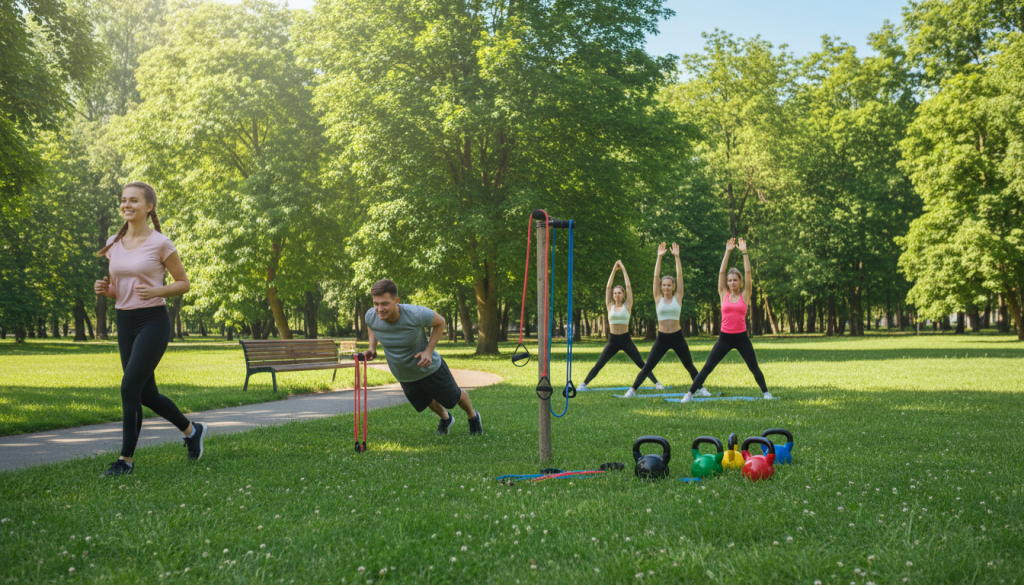
Outdoor workouts offer a refreshing alternative to traditional gym routines, making fat burning more enjoyable. Exercising in natural environments not only boosts your mood but also adds variety to your workout routine. As noted by fitness experts, outdoor activities can significantly enhance your overall fitness journey.
Benefits of Exercising Outdoors
Exercising outdoors has numerous benefits, including exposure to natural light, which can improve your vitamin D levels and overall mental health. The varied terrain and environments also challenge your body in different ways, potentially leading to more effective calorie-burning workouts. Moreover, outdoor workouts can be less monotonous, making it easier to stick to your fitness plan.
“Being outdoors makes exercise feel less like a chore.” This sentiment is echoed by many who have transitioned from indoor gyms to outdoor fitness activities. The change of scenery and the opportunity to connect with nature can make fat burning workouts more enjoyable and sustainable.
Fun Outdoor Fat Burning Activities
There are numerous outdoor activities that can help you burn fat and improve your fitness. Some of the most effective include:
- Hiking: A great way to challenge your cardiovascular system and burn calories.
- Cycling: Whether on a stationary bike or on trails, cycling is an excellent outdoor workout for fat loss.
- Swimming: Swimming in outdoor pools or natural bodies of water can be a fun and effective way to burn fat.
- Outdoor Boot Camps: Many fitness enthusiasts enjoy the camaraderie and challenge of outdoor boot camps.
As
“Exercise is a celebration of what your body can do, not a punishment for what you ate.”
Embracing outdoor workouts can make your fitness journey more enjoyable and rewarding.
Nutrition Tips to Complement Workouts
Nutrition plays a pivotal role in supporting fat loss exercises and enhancing metabolic training. When you’re working out to burn fat, your body requires the right fuel to optimize performance and recovery.
A well-balanced diet that complements your workout routine can significantly impact your fat loss journey. It’s not just about cutting calories; it’s about providing your body with the nutrients it needs to efficiently burn fat and build lean muscle.
Role of Nutrition in Fat Loss
Nutrition is fundamental to fat loss because it directly affects your metabolism and energy levels. A diet rich in whole foods, such as vegetables, fruits, lean proteins, and whole grains, supports a healthy metabolic rate and provides the necessary building blocks for muscle repair and growth.
- Protein-rich foods like chicken, fish, and legumes help build and repair muscle tissue.
- Complex carbohydrates such as brown rice, quinoa, and whole wheat bread provide sustained energy.
- Healthy fats found in nuts, seeds, and avocados support hormone production and overall health.
Pre- and Post-Workout Meal Ideas
What you eat before and after your workouts can significantly impact your performance and recovery. Pre-workout meals should be consumed about 1-2 hours before exercising and should include a mix of carbohydrates and protein to provide energy and support muscle function.
Some effective pre-workout meal ideas include:
- Oatmeal with banana and almond butter
- Greek yogurt with berries and honey
- Whole grain toast with avocado and eggs
Post-workout nutrition is equally important, as it helps in recovery and muscle repair. Consuming a meal or snack with protein and carbohydrates within 30-60 minutes after your workout can help replenish energy stores and support muscle recovery.
Examples of post-workout meals include:
- A protein shake with banana and almond milk
- Grilled chicken with sweet potato and green beans
- Salmon with quinoa and steamed vegetables
Tracking Your Progress
As you embark on your fitness journey, tracking your progress can significantly enhance your motivation and overall success. Monitoring your advancements helps you understand what works and what doesn’t, allowing you to make necessary adjustments to your weight loss exercises and HIIT workouts.
Tools for Monitoring Workouts
To effectively track your progress, you can utilize various tools and techniques. Here are some popular options:
- Fitness trackers and smartwatches that monitor heart rate, steps, and calories burned.
- Mobile apps like MyFitnessPal for calorie tracking and workout logging.
- Spreadsheets or journals to record your workouts and progress over time.
Importance of Setting Goals
Setting realistic and achievable goals is crucial for maintaining motivation and direction in your fitness journey. Here are some tips for effective goal setting:
- Make sure your goals are specific, measurable, achievable, relevant, and time-bound (SMART).
- Break down larger goals into smaller, manageable milestones.
- Regularly review and adjust your goals as needed to stay on track.
By combining the right tools for monitoring your workouts with a clear understanding of your goals, you can stay motivated and focused on achieving success with your fat burning workouts.
Fat Burning Workouts for Beginners
Embarking on a fitness journey can be daunting, but with the right guidance, beginners can kickstart their path to a healthier lifestyle. Fat burning workouts are an excellent way to start, as they not only help in losing weight but also improve overall health and fitness.
Starting Your Fitness Journey
For beginners, starting a new workout routine can be both exciting and intimidating. The key is to begin with simple, manageable exercises that can be gradually intensified. Beginner-friendly fat burning workouts often include a mix of cardio and strength training exercises.
Some effective cardio routines for beginners include brisk walking, jogging, cycling, and swimming. These exercises are not only great for burning fat but also improve cardiovascular health.
Essential Tips for Newbies
As a beginner, it’s crucial to listen to your body and not overexert yourself. Here are some essential tips to keep in mind:
- Start slow and gradually increase the intensity of your workouts.
- Stay hydrated before, during, and after your workouts.
- Warm up before starting any exercise routine to prevent injuries.
- Cool down afterwards to help your body recover.
- Consult with a healthcare professional or a fitness expert to create a personalized workout plan.
By following these tips and incorporating fat burning workouts into your routine, you’ll be well on your way to achieving your fitness goals. Remember, consistency is key, and every small step counts towards a healthier, fitter you.
Advanced Fat Burning Techniques
To enhance fat burning workouts, individuals can explore various advanced techniques. One effective method is metabolic training, which involves short bursts of intense exercise to boost metabolism. This type of training not only burns calories during the workout but also increases the body’s resting metabolic rate.
Exploring Different Workout Styles
Lean muscle workouts are another crucial aspect of advanced fat burning techniques. By incorporating strength training exercises into a routine, individuals can build lean muscle mass, further enhancing their metabolism. Different workout styles, such as Pilates or kickboxing, can also be incorporated to add variety and challenge to a fitness routine.
Using Technology to Enhance Workouts
Technology can play a significant role in enhancing workout effectiveness. Fitness apps and wearable devices can track progress, provide real-time feedback, and offer personalized recommendations. By leveraging these tools, individuals can optimize their workouts and achieve their fat loss goals more efficiently.